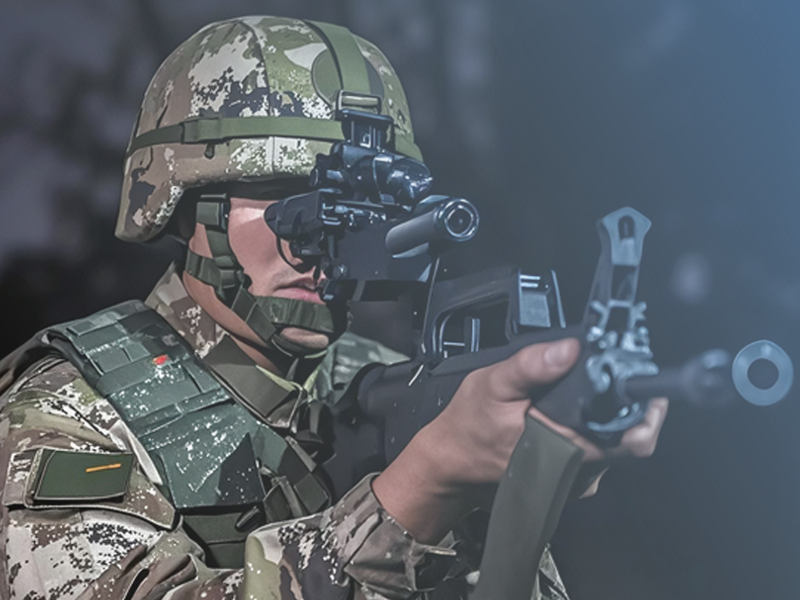
Wearable night vision has moved from specialist equipment to consumer and prosumer devices — monoculars, helmet-mounted viewers, clip-on thermal imagers. What made the shift possible is the shrinking of the imaging core itself.

A wearable lives or dies by weight and power. Every gram on a helmet mount is felt for hours; every milliwatt shortens a night patrol or a backcountry search. Modern uncooled LWIR cores answer both — instant-on operation, no cryocooler, and power budgets low enough for full-shift battery life — while 640-class resolution keeps image quality genuinely useful for navigation and object recognition, not just presence detection.
The other trend is fusion and connectivity. Wearables increasingly pair a thermal channel with a low-light visible/NIR channel — thermal finds the heat signature, visible light supplies the natural-perspective scene the eye expects. Digital video output closes the loop: recording, streaming to a team phone, or feeding AR overlays for hands-free operation.

From night hiking and wildlife observation to search-and-rescue and industrial night shifts, lightweight thermal cores are turning “see in the dark” into a wearable feature.
Typical Deployments
- Helmet & head-mount viewers: lightweight thermal for hands-free night navigation
- Handheld monoculars & clip-ons: consumer and prosumer thermal imagers for outdoor exploration
- Search & rescue wearables: team-linked devices streaming thermal video to a command phone
- Industrial night shifts: safety vision for workers in unlit plants, yards, and utility sites
Module Selection Guide
| Scenario | Module | Key figures |
|---|---|---|
| Head/helmet-mount thermal | SPECTRA L06A (640×512) | Instant-on uncooled LWIR |
| Natural-perspective night vision | Low-Light Visible/NIR Module | Low-light + NIR channel |
| 1080p visible recording | SPECTRA V19A | 1920×1080 visible channel |
| Next-gen fusion viewers | FUSION LV0625A | Registered IR + visible, one module |