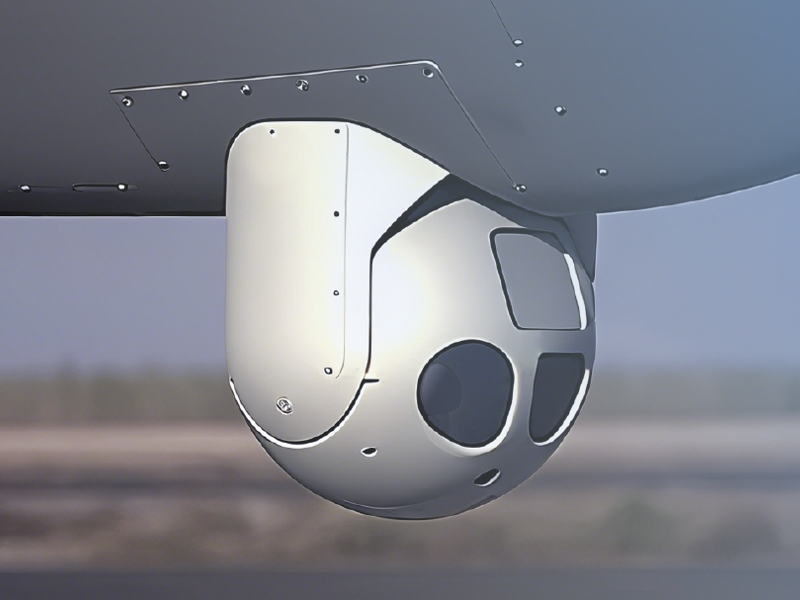
Multi-band imaging and AI-integrated infrared vision are transforming aviation and UAV platforms — becoming a core driver for flight safety, mission effectiveness, and all-weather operational capability.

For aircraft and UAV platforms, this technology works like a pair of “intelligent eagle eyes” — capturing clear imagery in dense fog, heavy rain, sandstorms, and other complex meteorological conditions that degrade conventional optical sensors. Multi-band imaging penetrates cloud layers and haze to obtain high-resolution target imagery, while onboard AI algorithms filter for key targets, classify what they see, and predict movement trajectories.
For payloads ranging from compact UAV gimbals to large EO/IR turrets, imaging cores must balance three competing demands: detection range, image quality, and SWaP (size, weight, and power). Cooled MWIR cores deliver the longest reach for medium-to-long-range observation, while high-resolution dual-band fusion gives both human operators and downstream AI systems richer, better-registered imagery to work with.

Whether supporting civil aviation sensing, UAV surveillance payloads, or aerospace research platforms, this technology lets airborne systems see further and decide faster than ever before.
Typical Deployments
- Medium-to-long-range EO/IR turrets: cooled MWIR payloads for target detection and recognition at standoff distances
- UAV surveillance payloads: lightweight cores that respect strict SWaP budgets while delivering all-weather imagery
- Civil aviation sensing: enhanced vision for flight safety in fog, rain, and low-light approaches
- Aerospace research platforms: multi-band imaging for atmospheric, materials, and flight-test research
Module Selection Guide
| Scenario | Module | Key figures |
|---|---|---|
| Long-range turret observation | SPECTRA H10A (1024×768) | 144 mm F3.0 athermalized, ≥5 km recognition (vehicle) |
| HD cooled MWIR payloads | SPECTRA M12A (1280×1024) | 10 μm pitch, SDI / CameraLink / MIPI |
| Compact cooled MWIR | SPECTRA M06A (640×512) | NETD 16 mK, ≤10 W, −40 to +71 °C |
| Dual-band operator + AI fusion | FUSION LV1225A | 1280×1024 LWIR + 2560×1440 visible, single chip |