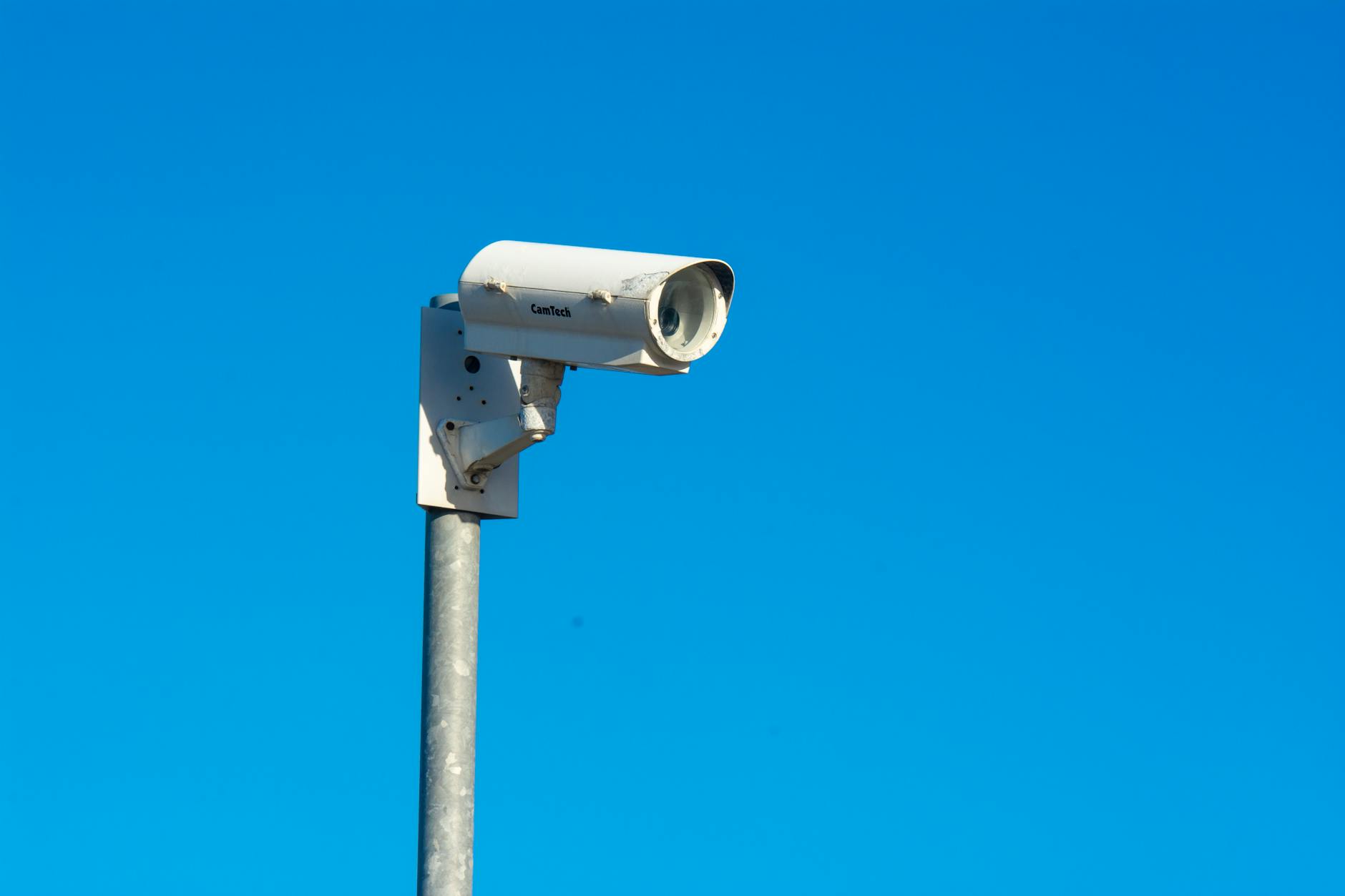
Thermal imaging for border surveillance is used to detect, classify, and track people, vehicles, boats, and animals across long perimeters where visible-light cameras may be limited by darkness, glare, haze, or low contrast. For OEM engineers and product managers, the key design question is not simply which detector has the highest resolution, but how sensor band, optics, stabilization, image processing, environmental sealing, network interfaces, and analytics combine to meet a specified probability of detection over distance, time, and weather.
How Does Thermal Imaging for Border Surveillance Work?
Thermal cameras form images from infrared radiation rather than reflected visible light. In border surveillance, this allows continuous observation during night operations and in scenes where targets are visually camouflaged against terrain. Human bodies, running engines, exhaust systems, recently driven roads, and sun-heated surfaces can produce measurable thermal contrast against surrounding backgrounds.
Most fixed perimeter systems use long-wave infrared (LWIR, typically 8-14 micrometers) or mid-wave infrared (MWIR, typically 3-5 micrometers). LWIR systems are often uncooled, compact, and power efficient, making them suitable for distributed towers, vehicle-mounted payloads, and remote unattended sensors. MWIR systems are usually cooled, offering higher sensitivity and strong long-range performance when paired with narrow field-of-view optics.
The detection chain typically includes an infrared module, lens assembly, stabilization or pan-tilt unit, onboard image enhancement, network video output, and optional AI detection. For example, a system intended for wide-area fixed surveillance may use a high-resolution LWIR module such as SPECTRA L12NT 1280×1024 LWIR to maintain scene coverage while preserving pixels on target. A longer-range payload may use a cooled MWIR module such as SPECTRA M12A 1280×1024 Cooled MWIR where sensitivity, aperture, and optical focal length justify the added size, power, and cooling requirements.
LWIR vs MWIR for Border Surveillance Cameras
LWIR and MWIR cameras can both support border surveillance, but they differ in detector architecture, cooling, atmospheric behavior, system cost, and integration complexity. LWIR is common for persistent surveillance because uncooled microbolometer modules reduce power draw, acoustic signature, maintenance needs, and startup complexity. These traits matter for remote towers, solar-powered sites, mobile border vehicles, and mass-deployed perimeter nodes.
MWIR is commonly selected where long standoff distance, small target signatures, or narrow fields of view are required. Cooled MWIR detectors can provide lower noise-equivalent temperature difference and better sensitivity under demanding conditions, but the cryocooler introduces warm-up time, service-life planning, mechanical vibration considerations, and power budgeting. For OEMs, this is not only a sensor choice; it affects enclosure design, heat rejection, reliability modeling, and field maintenance strategy.
Atmospheric transmission also matters. Water vapor, fog, rain, dust, and thermal turbulence affect infrared propagation differently by wavelength and local climate. A desert border, maritime border, high-altitude pass, and humid river corridor may not share the same optimal band. Publicly available references from organizations such as SPIE and IEEE Xplore can be useful when reviewing atmospheric propagation studies, but OEMs should validate assumptions with site-specific range testing whenever possible.
The practical trade-off is therefore application-specific. LWIR is usually favored for low-power, broad deployment and strong night operation. MWIR is usually favored for higher-end long-range observation and target discrimination. Some platforms combine bands or pair thermal with visible imaging to improve operator interpretation and analytics robustness.
What Resolution and Lens Focal Length Are Needed?
Resolution alone does not define surveillance range. A 1280×1024 detector can outperform a 640×512 detector for wide-area coverage, but only if the lens, stabilization, image processing, and display chain preserve usable target detail. The important quantity is instantaneous field of view and pixels on target at the required distance.
OEM teams often begin with detection, recognition, and identification requirements. Detection may require only enough pixels to identify that an object is present. Recognition requires enough information to determine whether it is likely a person, vehicle, animal, or other class. Identification demands more detail and is affected by target pose, motion, weather, background clutter, and operator workload. Published criteria are useful as a starting point, but real systems should be validated using representative targets, terrain, and observation angles.
Lens selection involves focal length, F-number, transmission, focus mechanism, athermalization, size, and cost. A wide field of view supports area awareness and cueing, but reduces pixels per target at long distance. A narrow field of view improves range but requires accurate pointing, scanning, or cueing from radar, seismic sensors, fiber perimeter sensors, or wide-angle cameras. Continuous zoom lenses are common in high-end pan-tilt systems, while fixed lenses are suitable for lower-cost perimeter nodes with known coverage geometry.
High-resolution modules can reduce the need to choose between scene coverage and range. For border towers that must observe large sectors, a module such as SPECTRA L12NT 1280×1024 LWIR can help preserve spatial sampling across wider fields of view. For extreme-range observation, cooled MWIR optics and detectors may be preferred even when system cost and power increase.
When to Use Dual-Band Thermal and Visible Imaging
Dual-band systems combine thermal imaging with visible imaging, often using a shared housing, synchronized fields of view, and aligned video outputs. Thermal imaging supports detection in darkness and low-contrast scenes, while visible imaging helps operators interpret color, markings, clothing, license plates, vessel features, or terrain details when illumination permits. The combined approach is useful when the mission requires both persistent detection and evidentiary or operational context.
Dual-band imaging also supports analytics. A thermal channel can detect a warm moving object, while the visible channel can assist classification or reduce false alarms from rocks, vegetation, shadows, or animals. In daylight, visible imagery may provide higher apparent detail; at night or in backlit scenes, thermal imagery may be the primary detection source. The best systems treat the two channels as complementary rather than redundant.
For OEM products, integration issues include boresight alignment, timestamp synchronization, video encoding, metadata, image fusion latency, and calibration across temperature. A module such as FUSION LV1225A 1280×1024+2560×1440 is relevant when an OEM needs combined thermal and visible channels in a compact subsystem rather than designing optical, electronic, and mechanical alignment from the beginning.
Dual-band payloads are often selected for border towers, mobile surveillance vehicles, coastal watch points, and command-center feeds where operators need fast interpretation. They are also useful where one sensor cues another: a wide thermal channel may trigger a visible zoom inspection, or a visible AI model may be supplemented by thermal detection when illumination changes.
How to Integrate AI, Video Standards, and Edge Processing
Border surveillance systems increasingly use edge processing to reduce operator workload and network bandwidth. Instead of streaming every scene continuously to a command center for manual review, edge devices can detect motion, classify targets, track trajectories, and transmit alerts with metadata. This approach is especially useful for long borders where camera counts are high and staffing is limited.
AI performance depends heavily on training data, sensor configuration, site geometry, and environmental variability. A model trained on daylight visible imagery may not perform well on thermal scenes. A detector trained for people walking upright may miss prone individuals, partially occluded targets, distant vehicles, or boats near cluttered shorelines. For this reason, thermal AI should be evaluated with representative seasonal data, including rain, fog, heat shimmer, snow, vegetation motion, and low thermal contrast periods near sunrise or sunset.
Network integration also matters. Border systems often need compatibility with video management software, command platforms, and third-party sensors. The ONVIF ecosystem is widely used for IP video interoperability, while sensor characterization methods such as EMVA 1288 are relevant when comparing imaging performance in a disciplined way. OEMs should distinguish between basic video streaming compatibility and full operational integration, including telemetry, metadata, control commands, cybersecurity, and firmware update workflows.
For AI-enabled multi-band designs, NEXUS LV0619B AI multi-band Ethernet/SDI is relevant where edge analytics, multi-channel imaging, and standard video outputs must be combined in a deployable subsystem. Selection should include processor headroom, thermal limits, model update process, latency, false alarm tolerance, and integration with external cueing sensors.
How to Select an OEM Thermal Module for Border Security
OEM selection should start with a surveillance requirement rather than a detector data sheet. Important inputs include target types, required detection and recognition ranges, field of regard, mounting height, scan pattern, expected weather, power source, communications network, maintenance access, export-control considerations, and total system cost. A product intended for fixed towers may prioritize long-range optics and pan-tilt integration, while a vehicle-mounted system may prioritize size, weight, power, shock tolerance, and fast startup.
Mechanical integration should account for vibration, pointing stability, enclosure window transmission, condensation control, thermal management, and service access. Electrical integration should account for input voltage range, peak current, video interfaces, control protocols, time synchronization, and electromagnetic compatibility. Software integration should include image enhancement controls, non-uniformity correction behavior, metadata, cybersecurity, and long-term firmware support.
Environmental testing is also central. A border surveillance camera may operate across high solar load, freezing nights, dust, rain, salt fog, and rapid temperature transitions. System-level testing should verify focus stability, image quality through the protective window, network behavior under packet loss, and AI performance under realistic false-alarm sources. Standards from organizations such as ISO may be relevant for broader quality, environmental, and management frameworks, but mission validation still requires scenario-specific testing.
For application context, the Border Security page summarizes typical deployment needs across perimeter monitoring, long-range observation, and multi-sensor systems. The final module choice should balance detection range, integration risk, lifecycle cost, and maintainability rather than optimizing a single specification.
For projects that combine imaging with wide-area detection, Border Surveillance Systems explains the complementary radar or multi-sensor layer and how it supports target cueing and operational confirmation.
FAQ
What is the best thermal camera type for long-range border surveillance?
Cooled MWIR is often preferred for the longest ranges because of detector sensitivity and compatibility with long focal-length optics. Uncooled LWIR remains practical for many fixed and mobile systems where lower power, simpler maintenance, and wider deployment are more important than maximum standoff distance.
Can thermal imaging identify a person at a border?
Thermal imaging can detect and help classify a person, but identification depends on pixels on target, lens focal length, range, atmospheric conditions, target pose, and image quality. Thermal imagery usually provides less facial or clothing detail than visible imagery, so dual-band systems are often used when operator interpretation or evidentiary context is required.
Does fog or rain affect thermal border surveillance cameras?
Yes. Fog, rain, water vapor, dust, and heat shimmer can reduce contrast and range. The amount of degradation depends on wavelength band, droplet size, path length, target temperature contrast, and local weather. OEMs should validate range claims in representative site conditions instead of relying only on nominal clear-weather specifications.
Is AI reliable for border intrusion detection with thermal cameras?
AI can reduce operator workload and improve alerting, but reliability depends on training data, sensor placement, target classes, weather, and false-alarm sources. Thermal AI should be tested with site-specific scenarios and monitored after deployment because seasonal background changes can affect model performance.
What should OEMs evaluate before choosing a thermal imaging module?
OEMs should evaluate spectral band, resolution, lens options, sensitivity, video interface, control protocol, power, size, environmental limits, image processing, AI requirements, compliance needs, and supplier lifecycle support. The correct module is the one that meets the required detection and recognition performance inside the complete border surveillance system.