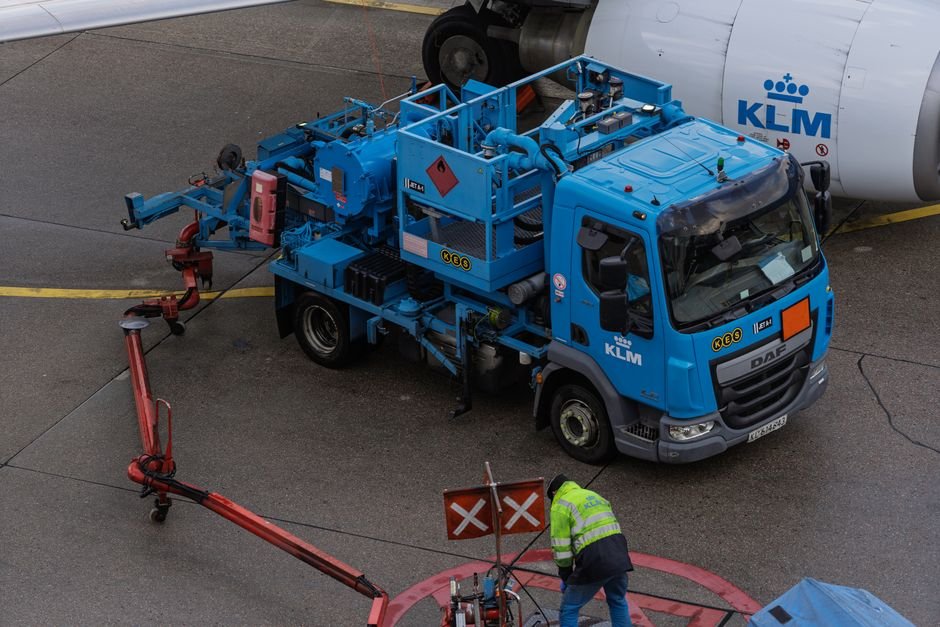
An airport’s most dangerous real estate is the ground itself. The apron at night is a choreography of tugs, belt loaders and fuel trucks moving within metres of aircraft worth tens of millions; the runway between inspections is a surface where a single dropped bolt can destroy an engine. Both problems are visibility problems. Ground crews work under patchy floodlighting that throws hard shadows exactly where people walk, and foreign object debris — FOD — is searched for by human eyes on foot, a few times a day, on a surface that is unwatched the rest of the time.
This case looks at how a regional airport added a dual-spectrum thermal layer to its surface surveillance: watching ground operations through darkness and weather, and turning FOD detection from a scheduled walk into a continuous scan.
Project Background
In 2023, the operations department of a regional airport in central China — a single runway, about forty thousand movements a year, with a growing night cargo schedule — reviewed a string of surface incidents. A tow tug had passed within metres of a marshaller in rain and darkness; a fox crossing the runway at dusk had forced a go-around; and a metal fastener found on a morning FOD walk had clearly been lying there since the previous evening’s construction work. The airport’s toolkit was the conventional one: visible CCTV around the apron, three scheduled FOD inspection walks per day, and wildlife control driven by patrol sightings. Management approved a dual-spectrum program: combined thermal and visible camera heads on the tower and apron masts, feeding the operations room with a fused picture, plus an automated FOD scanning pilot on the runway.
Pain Points of the Traditional Approach
- The apron goes dark in patches. Floodlighting creates bright islands and deep shadow; visible CCTV inherits the same blind spots, and rain at night reduces it to streaks.
- Zone discipline relied on everyone behaving. Vehicle corridors, closed stands and construction areas were enforced by markings and radios — nobody knew a vehicle had entered a closed zone until someone reported it.
- FOD walks are snapshots. Three inspections a day left the runway unobserved for hours at a stretch, while the night cargo schedule kept adding movements in exactly those gaps.
- Wildlife was managed by luck. Dusk bird and animal activity was logged when patrols happened to see it; the first formal notice of an animal on the runway was often the pilot’s.
The Thermal Imaging Solution
The airport installed dual-spectrum camera heads — a radiometric thermal channel paired with a low-light visible channel in one housing — on the control tower and along the apron edge, with the fused feed in the operations room. On the apron, the thermal channel carries detection: people, tugs and vehicles stand out cleanly through darkness, rain and shadow, and geofenced analytics now raise an automatic alert when a vehicle enters a closed stand or a person crosses outside the marked corridors. The visible channel supports identification and the incident record.
On the runway, the same heads run an automated FOD scan between movements. Debris on pavement is a thermal problem as much as a visual one: objects heat and cool differently from the surface they lie on, so a dropped tool, a bolt or a strip of rubber shows as a contrast anomaly against the slab — in daylight, at night, and in light precipitation that would wash out a visible scan. Suspected FOD is flagged with coordinates for the duty team to verify and clear. Wildlife monitoring rides the same feed: animal movement near the strip is detected early enough for dispersal before the next arrival.
What the Thermal Solution Changed
- The night apron became fully observable. Ground operations are watched continuously through darkness and rain; the shadow gaps that hid people between floodlights no longer exist in the thermal channel.
- Zone violations surface in seconds. Geofenced alerts have replaced radio reporting — vehicles entering closed areas are challenged while it still matters, and the record has settled two contractor disputes.
- FOD detection went continuous. Between-movement scans flagged debris eleven times in the first season — twice metal objects from construction work — all cleared before the next arrival, none left to the morning walk.
- Wildlife response moved ahead of the aircraft. Dusk animal activity is now detected and dispersed proactively; go-arounds for runway wildlife have not recurred since the system went live.
Module Selection Notes
Airport surface surveillance is a long-range, all-weather duty: the thermal channel needs resolution enough to hold a person at several hundred metres from the tower, radiometry stable enough for automated contrast analytics, and a visible channel that keeps working in low light for identification. The SPECTRA L12T 1280×1024 LWIR module provides the high-resolution thermal channel for this role; the SPECTRA V19A visible camera module is its low-light identification partner in the same housing. See the border and perimeter security application page for wide-area critical-infrastructure patterns.
Watching an airfield, a perimeter or another wide-area critical site? Talk to our engineers about dual-spectrum coverage design.