A city’s traffic management center lives on its camera feeds — until the light goes bad. At night, in rain, in fog, and in the low sun of rush hour, visible cameras degrade exactly when the road is most dangerous: stalled vehicles become dark shapes, pedestrians in dark clothing vanish, and the automatic incident detection that works at noon starts missing events at dusk.
This case looks at how a smart city pilot closed that gap on a busy urban arterial by adding dual-spectrum thermal-visible sensing with edge AI — and what around-the-clock detection changed for the operations center.
Project Background
In 2024, the traffic authority of a provincial capital in central China was running a smart city pilot on a 14-kilometer arterial corridor: six lanes, nine major intersections, a bus rapid transit line, and heavy commuter traffic mixing cars, buses, e-bikes, and pedestrians. The corridor was already dense with visible-light cameras — over a hundred of them — feeding an operations center where automatic incident detection flagged stopped vehicles, wrong-way drivers, and pedestrians on the roadway. The system’s blind spots were well documented internally: detection rates fell off sharply after dark, heavy rain and winter fog produced long stretches of unusable video, and night-time false alarms from headlights and shadows consumed operator attention. Two serious night incidents that year — a stalled car struck in fog, and a pedestrian hit on an unlit mid-block crossing — had both gone undetected until passing drivers called them in. The authority funded a dual-spectrum upgrade: paired thermal-visible units with onboard AI analytics at the corridor’s highest-risk locations.
Pain Points of the Traditional Approach
- Visible cameras are fair-weather sensors. Night, fog, rain, and headlight glare all attack the same single channel the detection algorithms depend on; coverage statistics looked excellent on paper and poor in the incident logs.
- Risk concentrates exactly when cameras are weakest. Dawn, dusk, and night carry a disproportionate share of severe incidents — the hours when visible-only detection was least reliable.
- Night false alarms train operators to ignore alerts. Headlight blooms, moving shadows, and steam generated so many spurious night events that genuine alerts competed with noise for attention.
- Adding street lighting doesn’t scale. Lighting the corridor to camera-grade levels meant rewiring nine intersections and years of budget — and it still fails in fog.
The Thermal Imaging Solution
The pilot installed dual-spectrum traffic monitoring units at the nine intersections and six mid-block hotspots identified from the incident history. Each unit combines a high-resolution LWIR channel with a visible channel on a single chip, with AI analytics running at the edge: the thermal channel detects road users by their heat signature — vehicles, pedestrians, e-bikes — while the visible channel adds color and context for operators.
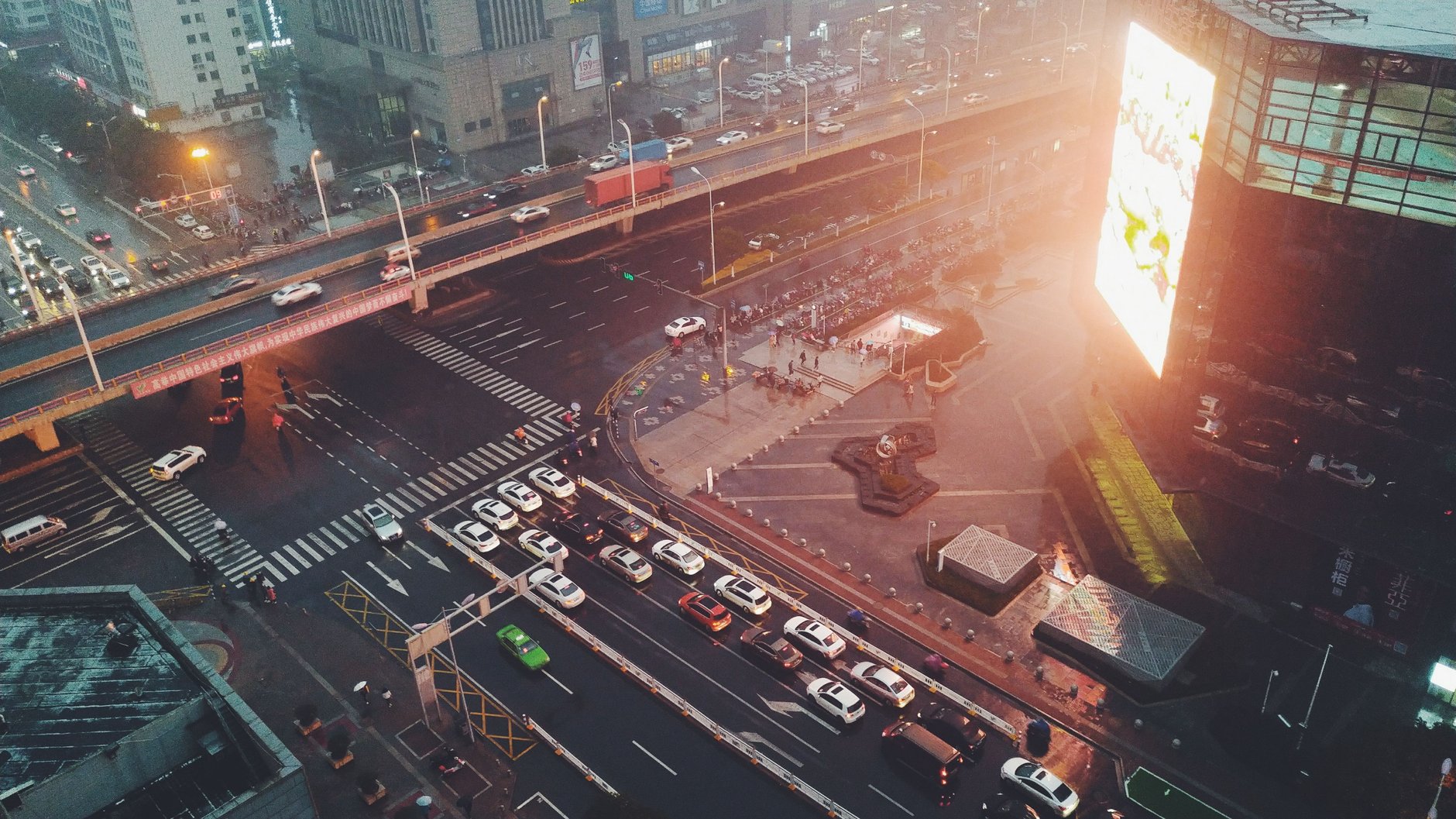
Because thermal imaging needs no light and sees through fog, rain, and glare, the detection layer stops depending on conditions: a stalled vehicle in a dark underpass, a pedestrian in black on an unlit crossing, a wrong-way e-bike in fog all present the same clean thermal signature. Edge AI classifies targets and raises incident events — stopped vehicle, pedestrian on roadway, wrong-way movement, queue overruns — with the thermal evidence frame attached, and the visible channel is recorded alongside for verification. The operations center kept its existing workflows; only the reliability of what arrived changed.
What the Thermal Solution Changed
- Detection stopped following the weather. Night and adverse-weather detection rates at the instrumented locations rose to within a few points of daytime performance; the corridor’s incident log for the following winter showed no event that waited for a passing driver’s phone call.
- Response times fell around the clock. With automatic detection working at night, average time-to-dispatch for stopped-vehicle events dropped from minutes to well under a minute at covered locations.
- False alarms stopped competing with real events. Thermal-based classification cut night-time nuisance alerts by more than two-thirds, and operators reported trusting the alert queue again.
- The lighting upgrade was descoped. The pilot’s results fed the citywide plan: dual-spectrum coverage at risk points replaced the proposed corridor-wide lighting rebuild, at a fraction of the cost.
Module Selection Notes
Traffic-side monitoring needs a dual-spectrum unit that resolves pedestrians and cyclists at pole-mounting distance, streams synchronized thermal and visible video that edge analytics can consume, and survives years outdoors on a gantry. The FUSION LV1225A dual-band imaging module is built for exactly this fixed-infrastructure duty; where onboard AI tracking is wanted at the sensor, pair it with the NEXUS LV0619B EO/IR AI tracking module. See the smart city application page for corridor and intersection deployment patterns.
Building all-weather sensing into a smart city or highway project? Talk to our engineers about dual-spectrum selection, edge analytics, and pole-top integration.