An airport fuel farm is two security problems in one fence line. It is a critical-infrastructure perimeter that must detect an intruder reliably, at night, in weather — and it is a hydrocarbon storage facility where a small ignition source matters enormously. The traditional answer treats these as separate systems: a fence sensor and CCTV for the perimeter, and flame detectors for the tanks. Both halves have a poor record at the exact moments they are needed.
This case looks at how an airport consolidated both jobs onto a single dual-spectrum camera network with on-camera AI — and what changed when the perimeter could see heat.
Project Background
In 2024, the operator of a regional airport in Central China completed a security review of its fuel farm: eighteen storage tanks, a rail offloading gantry, and 1.4 kilometers of fence backing onto open farmland. The existing protection was a vibration cable on the fence plus visible-light CCTV on poles — a combination that produced hundreds of nuisance alarms a month (wind, birds, vegetation, and the farm’s own cats) while the CCTV, dependent on floodlights, went effectively blind in fog and heavy rain. A near-miss the previous winter — a contractor’s cutting torch used near a bund without a permit, spotted by chance by a passing driver — pushed the operator to fund a dual-spectrum upgrade: fourteen dual-sensor positions covering the fence line and the tank area.
Pain Points of the Traditional Approach
- Fence sensors alarm on everything except intent. Vibration cables cannot tell a person from a gust of wind or a leaning branch; with hundreds of alarms a month, the control room’s threshold for dispatch had quietly risen to “alarmed twice.”
- Floodlit CCTV has holes. Cameras depending on visible light degrade exactly when intrusion risk rises — darkness, fog, driving rain — and floodlight coverage never quite reaches every meter of fence.
- Two hazards, two blind systems. The perimeter system watched for people and the flame detectors watched for fire, but neither could see the dangerous middle ground: a person doing hot work, a vehicle overheating near the gantry, an electrical cabinet warming up.
- Verification was manual and slow. Every ambiguous alarm meant a guard patrol or a radio call; response times stretched, and fatigue eroded attention to the console.
The Thermal Imaging Solution
Each new position carries a dual-spectrum unit: a radiometric LWIR core and a visible-light camera behind one window, with on-device AI classification running on an integrated edge module. The thermal channel detects — a human form is detectable at hundreds of meters in total darkness and fog — while the AI classifies the target and the visible channel confirms. Fence-line alarms now arrive pre-filtered: person crossing the approach zone, vehicle loitering at the gate, animal dismissed.
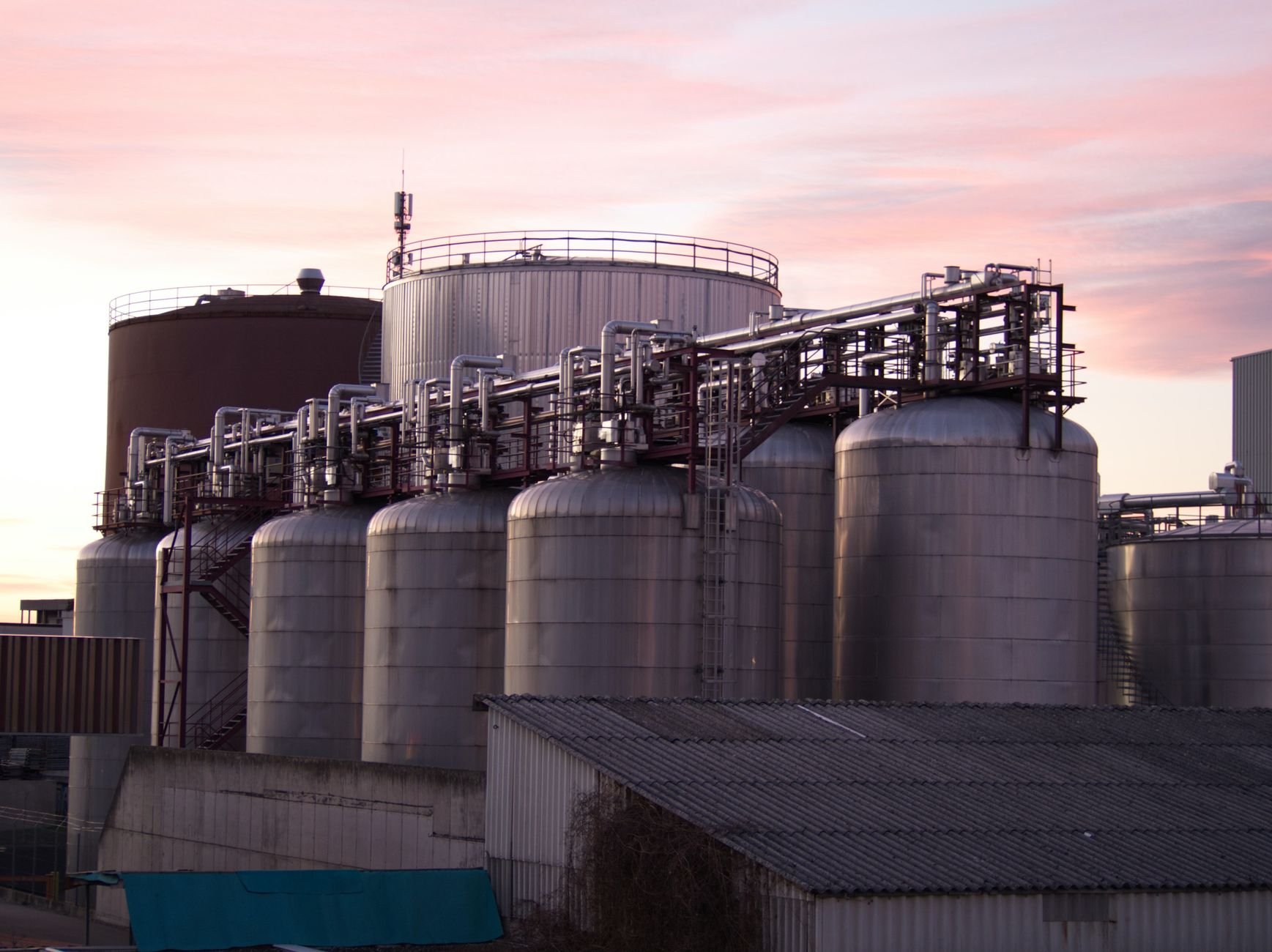
The same radiometric data does the second job for free. Because every thermal frame carries per-pixel temperature, the analytics also watch the tank farm itself: pump sets running hot, an electrical cabinet warming past its baseline, any open flame or hot work source anywhere in the field of view. One sensor network now covers intrusion and ignition, which is the entire risk model of the site.
What the Thermal Solution Changed
- False alarms fell by about 90%. AI classification on thermal signatures filtered wind, vegetation, and animals; the control room went from hundreds of monthly alarms to a manageable handful, and every dispatch is now for a verified target.
- Night and weather blindness ended. Detection performance no longer depends on floodlights; fog and rain that used to blind the CCTV are working conditions for the thermal channel.
- The ignition middle ground is covered. Hot work, overheating equipment, and flame anywhere in the camera fields of view generate the same verified alarms as intrusions — the contractor-with-a-torch scenario now alarms in seconds.
- One network, two mandates. The upgrade replaced a fence sensor system, a CCTV expansion plan, and a separate fire-watch proposal with a single installation — the combined cost came in below the sum of the three it displaced.
Module Selection Notes
Perimeter-plus-fire-watch duty wants a radiometric LWIR core with detection range in the hundreds of meters, paired visible imaging, and an AI module that can classify on the edge. The FUSION LV0625A dual-spectrum camera integrates the thermal and visible channels in one unit; the NEXUS LV0619B AI imaging system adds on-device detection and classification. See the border security and fire detection application pages for related patterns.
Securing a fuel farm, depot, or critical-infrastructure perimeter? Talk to our engineers about core selection, optics, and AI integration.