In a missing-person search, the most important number is the time since the person was last seen — every hour widens the search area and, in cold weather, shrinks the window in which finding someone is a rescue rather than a recovery. Yet the traditional search toolkit works worst exactly when the stakes rise: darkness stops ground teams and helicopters alike, and a person under tree cover or lying in dead ground is nearly invisible to a flashlight line.
This case looks at how a county emergency response team built its night search capability around thermal-equipped drones, and what that did to the outcome statistics.
Project Background
In 2024, the emergency response bureau of a county in East China — a hilly, forested area popular with weekend hikers, with an elderly rural population — reviewed two years of missing-person callouts. The pattern was uncomfortable: thirty-odd searches a year, a median duration over five hours, and the longest and hardest cases clustered at night. The team owned one thermal monocular shared among eight ground squads, and helicopter support from the provincial fleet was expensive, weather-limited, and — crucially — unavailable after dark. The bureau funded a drone search capability: two multirotors with radiometric thermal payloads, four trained pilot-operators, and a standard night-search procedure.
Pain Points of the Traditional Approach
- Darkness stops the search. Ground teams with flashlights cover a few hectares per hour and slow to a crawl in rough terrain at night; past midnight, operations were routinely suspended until dawn — exactly when a hypothermia clock runs fastest.
- Flashlights see light, not people. A person lying in a depression, under a fallen tree, or in dense scrub reflects nothing back; ground teams have walked within meters of subjects without seeing them.
- Helicopters are scarce and daylight-bound. The provincial helicopter could not fly at night in this terrain, and its daytime availability meant searches waited rather than started.
- The search area grows while you organize. Every hour spent assembling teams and equipment is an hour in which a walking subject’s circle expands and a stationary subject’s condition worsens.
The Thermal Imaging Solution
The drones carry a radiometric LWIR payload — a 640×512 thermal core on a stabilized gimbal, paired with a visible camera for daylight confirmation. A human being is a strong thermal emitter against cold night ground: standing, crouched, or lying down, a person shows as a bright signature at hundreds of meters, under light tree cover, in drizzle and ground mist that defeat flashlights.
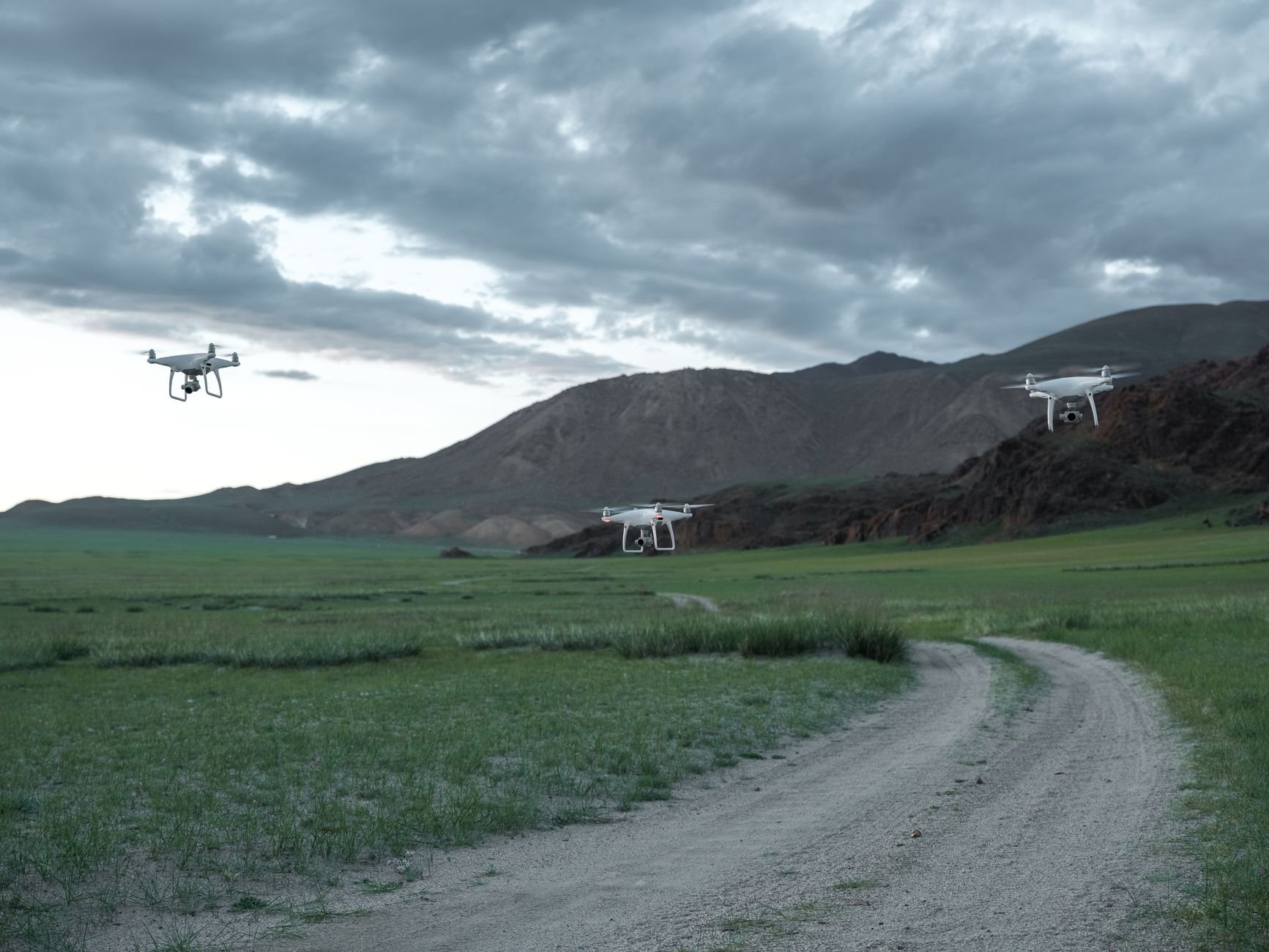
The standard procedure launches within thirty minutes of the call: one drone flies a lawnmower pattern over the probability area while the operator scans the thermal feed on a large screen at the command post; the second drone stands by to confirm and to hover over finds. Every detection is marked with coordinates and radioed to the nearest ground squad with a walk-in route. Because the thermal frames are radiometric, the operator can tune palettes and temperature windows live — stretching contrast on a weak signature that a snapshot would have missed.
What the Thermal Solution Changed
- Search time collapsed. In the first year, the team’s median time-to-find on drone-assisted searches dropped from over five hours to under ninety minutes; night searches, previously the hardest cases, are now often the fastest.
- Night became an advantage. Cold night ground maximizes thermal contrast — the drones’ best detections happen in the hours the old procedure suspended operations.
- Two rescues that would have waited. Two winter cases — an elderly walker with dementia and an injured hiker — were located after midnight in conditions where the next morning would have been too late.
- Coverage per person multiplied. A two-person drone crew now clears in one flight what a twenty-person ground line needed hours to walk, and ground squads are reserved for access and evacuation instead of scanning.
Module Selection Notes
Search payloads need a radiometric LWIR core with enough pixels to make a human signature unambiguous at search altitude, low weight for endurance, and a live radiometric feed the operator can interrogate. The SPECTRA L06T2 640×512 LWIR core is the standard search choice; where weight is critical, the SPECTRA L04T 384×288 core trades pixels for flight time. See the search and rescue application page for payload and procedure patterns.
Building a drone search capability or equipping an emergency response team? Talk to our engineers about core selection, optics, and payload integration.