Overhead transmission lines fail at their connections. Compression joints, dead-ends, and clamps develop contact resistance over the years; resistance becomes heat under load, and heat accelerates the degradation in a loop that ends with a dropped conductor. The physics is well understood — the hard part is looking often enough, at the right load, across thousands of kilometers of terrain that does not cooperate.
This case looks at how a provincial grid operator moved its thermal inspection from an annual helicopter contract to an in-house drone program built around lightweight radiometric cores.
Project Background
In 2024, the transmission arm of a provincial grid operator in Southwest China was responsible for 3,800 km of 110–500 kV lines, much of it crossing mountainous terrain. Its thermal inspection relied on two helicopter sorties a year, supplemented by ground crews with handheld cameras where access allowed — which meant the mountain sections effectively received one thermal look per year, at whatever load and weather the sortie day happened to offer. After a dead-end joint failure dropped a 220 kV circuit onto a forested slope in dry season — caught by protection, no fire, but a near-miss that made every review meeting uncomfortable — the operator stood up an in-house drone thermal program: six multirotor teams, each aircraft carrying a dual payload of a 640×512 radiometric thermal core and a visible-light camera.
Pain Points of the Traditional Approach
- Sortie economics cap the cadence. Helicopter hours price out frequent inspection, so the baseline was annual — and a joint can develop, worsen, and fail comfortably inside a year.
- Load dependence works against schedules. A resistive connection only heats under load. A sortie that flies at midday light load walks straight past defects that glow at the evening peak.
- Ground access is the exception. Mountain spans cost a crew a day to reach a usable viewing angle, and many spans have no ground line-of-sight at any angle.
- No comparable record. Handheld photographs from the ground, taken from different positions in different years, cannot be trended. There was no baseline to measure worsening against.
The Thermal Imaging Solution
Each drone team flies a standardized pattern: defined hover points at every tower, paired thermal and visible frames of every joint, clamp, and insulator string, shot from consistent angles. Because the thermal frames are radiometric, per-pixel temperature rides back to the office software with every image, where each fitting is compared automatically against its own history and against its two phase-mates — the classic rule that a joint running 10°C above its siblings under similar load is a defect now runs without human review.
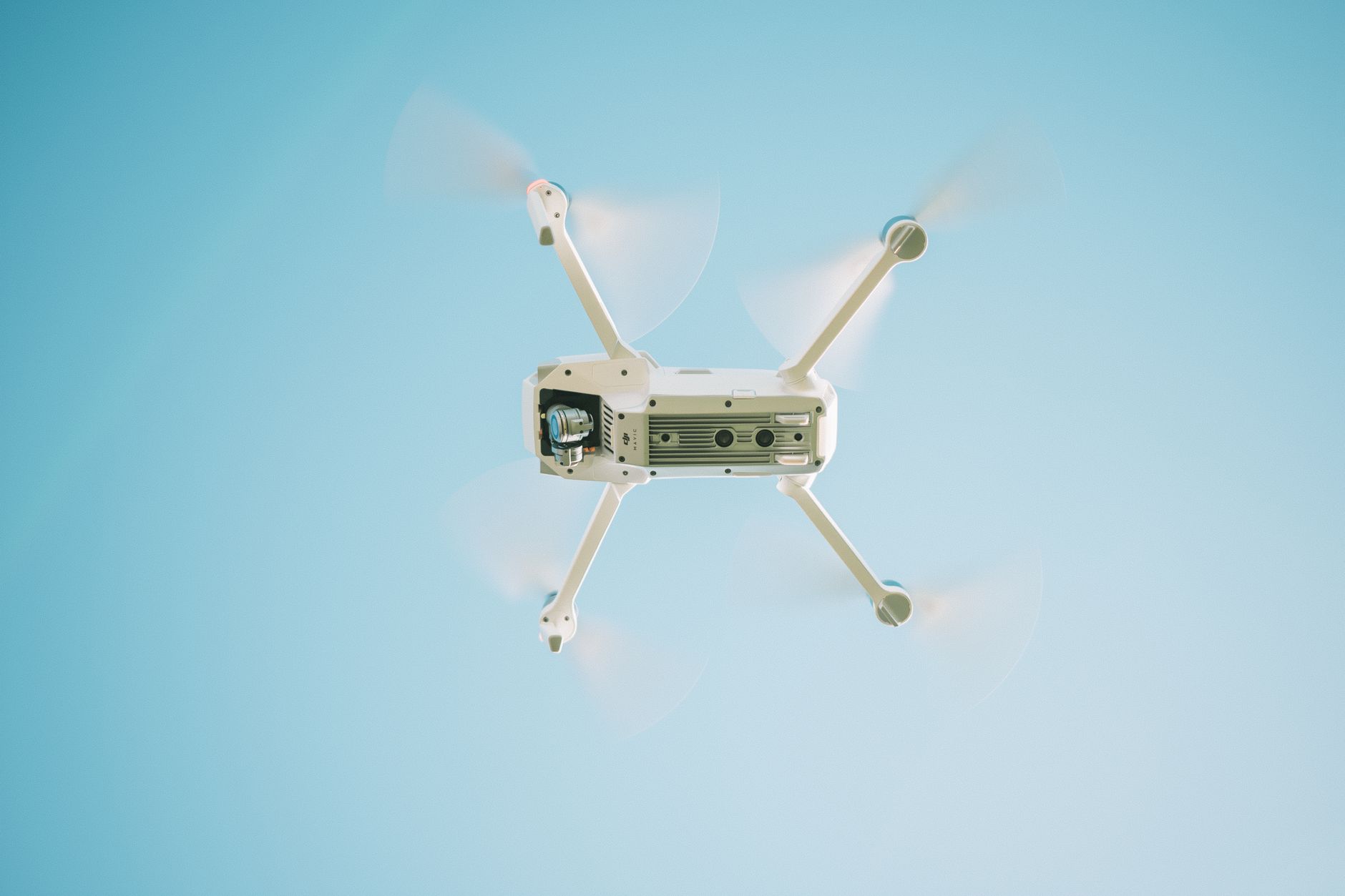
Teams deliberately fly evening peak-load windows, when resistive heating is most visible. In mountain terrain a team completes about fifteen towers a day; in rolling country, more than forty.
What the Thermal Solution Changed
- Cadence quadrupled. Critical corridors went from one thermal look per year to quarterly; spans with old fittings or heavy loading are flown monthly.
- The defect queue became real. In the first year the program found 47 confirmed hot joints, all repaired on schedule. The reliability office credits it with at least two avoided mid-summer failures.
- Trending replaced snapshots. Every fitting now has a comparable thermal history, and the repair queue is prioritized by measured rate of worsening rather than by whoever shouted loudest.
- The economics inverted. The six-team program costs roughly what one annual helicopter contract used to — with four times the coverage and full ownership of the data.
Module Selection Notes
Airborne power inspection wants the lightest radiometric core that still resolves a fitting at stand-off distance. The SPECTRA L04T 384×288 LWIR core suits tight SWaP budgets and closer working distances; the SPECTRA L06T2 640×512 core buys stand-off distance and pixel density when towers cannot be approached closely. Pair either with a visible-light block such as the SPECTRA V19A for paired documentation. See the power inspection and airborne/UAV application pages for payload patterns.
Building a drone inspection payload or a grid monitoring program? Talk to our engineers about core selection, optics, and integration.