Methane and VOC leaks in a petrochemical plant are invisible by definition — the gases that matter most are colorless, and the leaks that matter most are small: a weeping valve stem, a flange gasket past its life, a compressor seal starting to go. The traditional way to find them is to walk the plant with a sniffer probe and touch it, one by one, to every potential leak point. In a complex with tens of thousands of fittings, that arithmetic never works.
This case looks at how a petrochemical park moved its leak detection and repair (LDAR) program to optical gas imaging — and what changed when leaks became visible.
Project Background
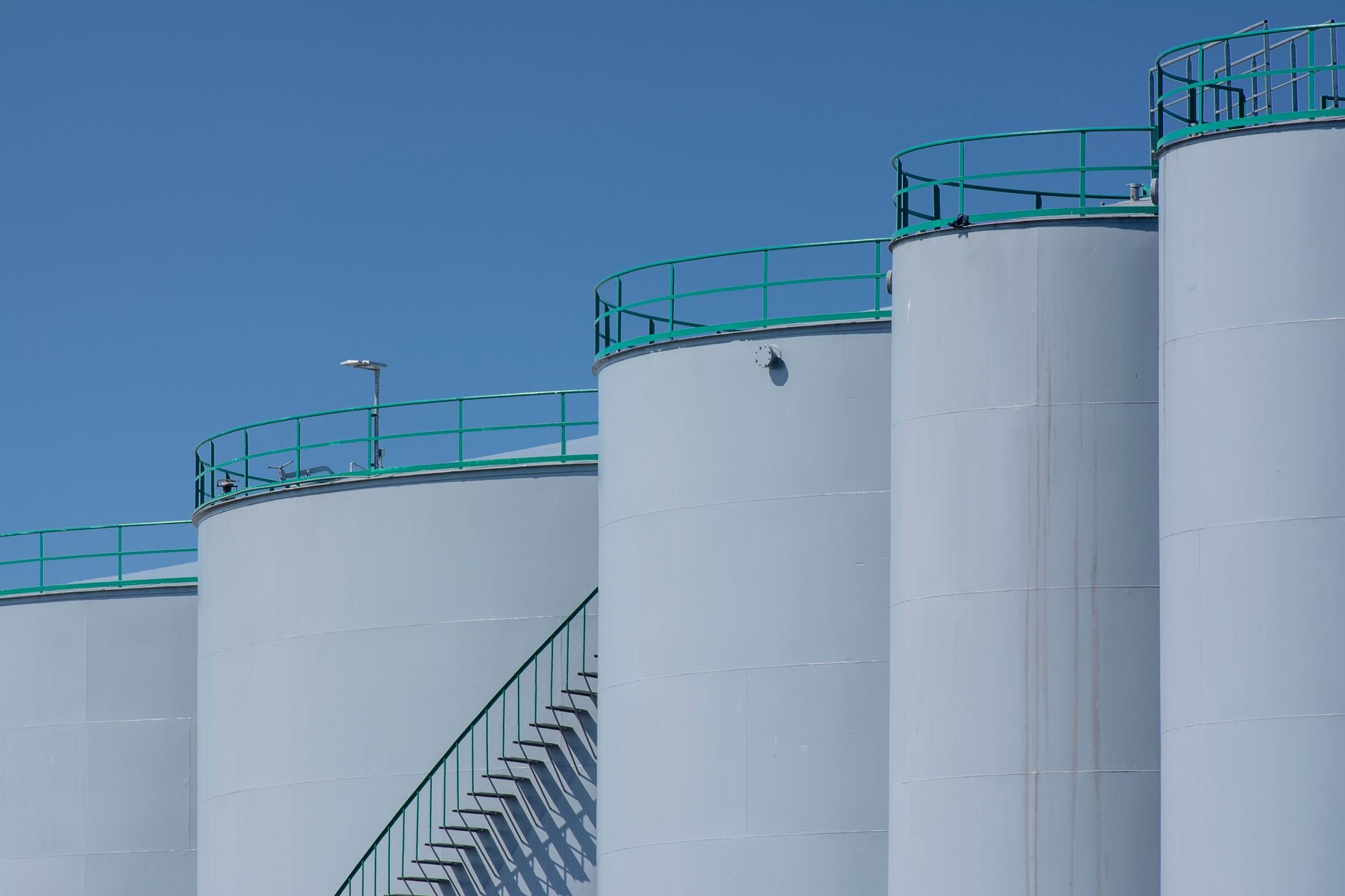
In 2023, the HSE department of a petrochemical complex in South China — three production trains, a tank farm, and roughly sixty thousand regulated fittings — faced a tightening emissions audit. Its LDAR program followed the standard method: technicians with flame-ionization sniffers working through component lists, each fitting measured at contact distance, logged, and tagged. A full plant cycle took eleven months with a four-person team, and the audit found what the team suspected: elevated components, pipe racks, and tank-roof seals were chronically under-surveyed because scaffolding and permits made them slow to reach, and several large leaks the audit found with an OGI camera had clean sniffer histories — they vented from above, away from probe contact. The department funded an OGI program: two cooled-MWIR gas-imaging cameras, operator training, and a revised survey protocol.
Pain Points of the Traditional Approach
- The arithmetic never closes. Sixty thousand fittings at a few minutes each is years of labor; any program that size is triaged, and triage means some components are never actually measured.
- Contact measurement misses geometry. A sniffer reads the air at the probe tip; leaks that plume upward, drift in wind, or sit behind insulation give clean readings at contact distance.
- Hard-to-reach means never-reached. Elevated racks, tank roofs, and flare-adjacent piping accumulated scaffold and permit costs per point, so they were surveyed rarely — precisely the components whose failures are largest.
- A number is not a leak location. Even a positive sniffer reading starts a second hunt: which of the six fittings in the vicinity is actually leaking?
The Thermal Imaging Solution
Optical gas imaging flips the problem. A cooled MWIR camera, its detector filtered to the absorption band of hydrocarbons, sees the gas itself: a leak appears as a drifting smoke-like plume against the background, live on screen, from tens of meters away. The survey unit becomes the scene, not the fitting — an operator scans a whole pipe rack in one sweep, and any plume is immediately visible, located, and recordable.
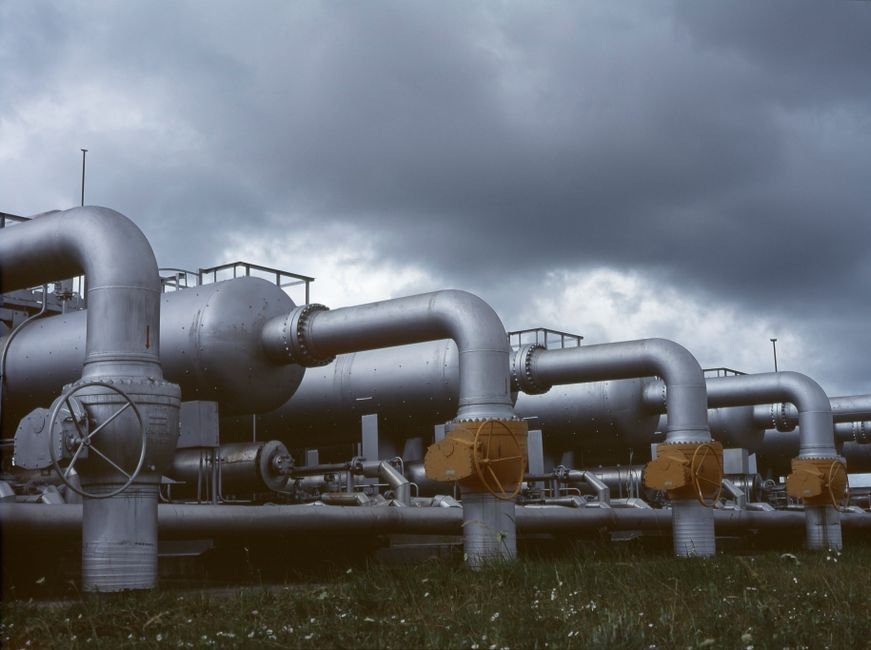
The revised protocol runs on two passes: a quarterly full-plant OGI sweep that covers every rack, manifold, and tank seal from accessible vantage points, and targeted sniffer follow-up only where OGI flags a plume, to quantify for repair thresholds. Detection that was contact-based became line-of-sight-based; the eleven-month cycle collapsed to weeks.
What the Thermal Solution Changed
- Survey time fell by over 90 %. A full plant OGI sweep takes the same four-person team under four weeks, so the survey cadence moved from annually to quarterly with no headcount change.
- The audit findings reversed. The follow-up audit found the program’s detection rate on its seeded test leaks rose from under half to over 95 % — including the elevated and wind-drifted leaks the old method structurally missed.
- First-year finds paid for the program. Several of the leaks found in the first sweeps — a compressor seal, two tank-roof seals, a buried-line valve — were large enough that product recovery and avoided fines covered the cameras and training within the year.
- Hard-to-reach became routine. Elevated racks and tank roofs, previously surveyed on multi-year cycles, are now imaged every quarter from ground level.
Module Selection Notes
OGI demands a cooled MWIR detector — the sensitivity and the spectral filtering that make gas plumes visible are what coolers buy. The SPECTRA M06A cooled MWIR module is the standard OGI choice for handheld and tripod survey units; the SPECTRA H10A cooled MWIR module serves fixed monitoring installations watching critical manifolds continuously. See the gas leak detection application page for survey and fixed-monitoring patterns.
Building or upgrading an LDAR program? Talk to our engineers about cooled-core selection, spectral filtering, and camera integration.