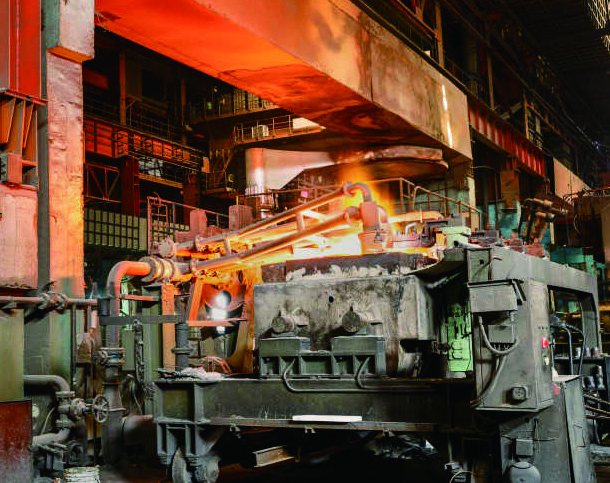
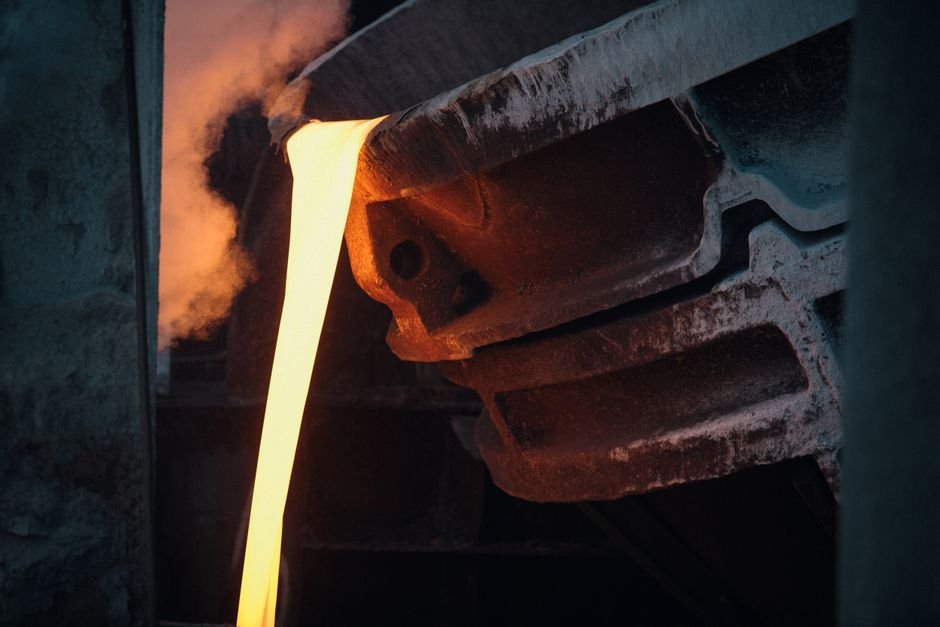
A steel ladle is a pressure-free vessel with one job: hold 150 tons of liquid steel at 1,650°C without letting it out. The barrier is a refractory lining that wears with every heat. When the lining thins locally, the steel shell above it warms — first by tens of degrees, then by hundreds. A ladle breakout, where the shell is breached, is among the most dangerous events in a steelworks. So the shell temperature is watched, and the question, again, is how well.
This case looks at how a steel plant moved ladle shell inspection from a manual round to continuous thermal monitoring — and how it changed both safety and lining economics.
Project Background
In 2024, the maintenance department of an integrated steel plant in North China — two converters, a ladle fleet of forty-odd vessels cycling around the clock — reviewed its ladle management after a near-miss: a ladle withdrawn from service showed a shell hot spot over 300°C at a position its paperwork said was mid-life. The inspection regime was manual: an operator with a handheld pyrometer and chalk walking the ladle preparation stand once per shift, reading a handful of shell points per ladle and eyeballing for discoloration. Ladles were retired by heat count, a blunt instrument that scrapped sound linings early and, as the near-miss showed, could miss fast local wear entirely. The department funded a thermal monitoring system: fixed cameras imaging every ladle shell at the stands, plus a managed scan at the tapping bay.
Pain Points of the Traditional Approach
- A few points per shift is not coverage. A ladle shell is square meters of surface; a dozen pyrometer readings per shift sample less than one percent of it, and a local hot spot sits exactly where nobody pointed the gun.
- The dangerous window is between inspections. Refractory wear accelerates at end-of-life; a shell can move from normal to critical within a single shift — the interval the manual regime never saw.
- Heat-count retirement wastes linings. Retiring by calendar-equivalent heats scraps linings with safe remaining life and, worse, gives false confidence about vessels with abnormal local wear.
- People work next to liquid steel to do it. Every manual reading is a person standing near a full ladle — an exposure the safety department wanted engineered out, not managed.
The Thermal Imaging Solution
Fixed radiometric cameras now image the full shell of every ladle at the preparation stand and the tapping bay — every vessel, every heat, no sampling. A 1280×1024 LWIR core resolves the shell into zones, and the software keeps a thermal map per ladle ID: any zone exceeding its baseline by a set margin raises a watch flag, and a higher margin stops the ladle from returning to service.
Because every vessel is imaged every heat, the system works on trends, not thresholds alone: a zone warming 2–3°C per heat is scheduled for lining inspection days before it crosses an alarm line, and the refractory team sees the wear pattern mapped on the shell — which guides both repair and the next relining design.
What the Thermal Solution Changed
- Breakout risk moved from inspected to engineered. Continuous full-shell coverage closed the between-shifts window; in the first year, four ladles with abnormal local heating were withdrawn at the warm-shell stage, all confirmed with thinned refractory on teardown.
- Lining life extended by data. Ladles with healthy thermal signatures now run past the old heat-count retirement line under monitoring; average lining life rose by roughly a tenth, a direct refractory saving across the fleet.
- Nobody chalks shells next to liquid steel anymore. The manual pyrometer round was abolished; the safety case that had been on the department’s list for years was closed by removal, not mitigation.
- Refractory work became planned. Wear trends give the refractory shop a forward schedule of which ladle needs inspection when — relining shifted from reactive to rostered.
Module Selection Notes
Ladle shell monitoring needs a radiometric LWIR core with high resolution for full-shell zoning, measurement stability in a hot, dusty bay, and protection-rated integration. The SPECTRA L12A 1280×1024 LWIR core provides the pixel budget for whole-shell mapping; the SPECTRA H10A cooled MWIR module serves measurement-critical points needing maximum thermal sensitivity. See the process monitoring application page for metallurgical monitoring patterns.
Monitoring ladles, torpedo cars, or kilns? Talk to our engineers about core selection, protective housings, and trend analytics integration.