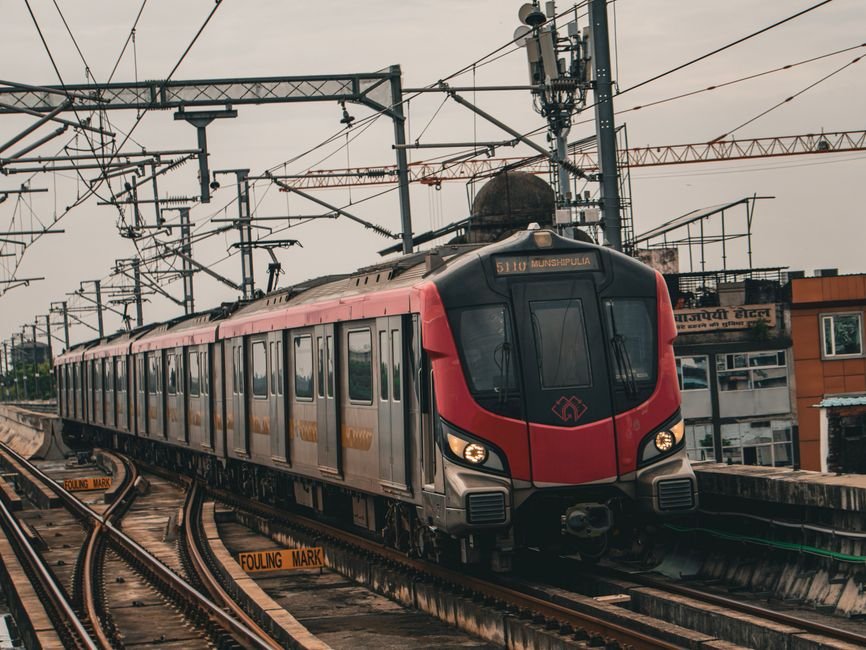
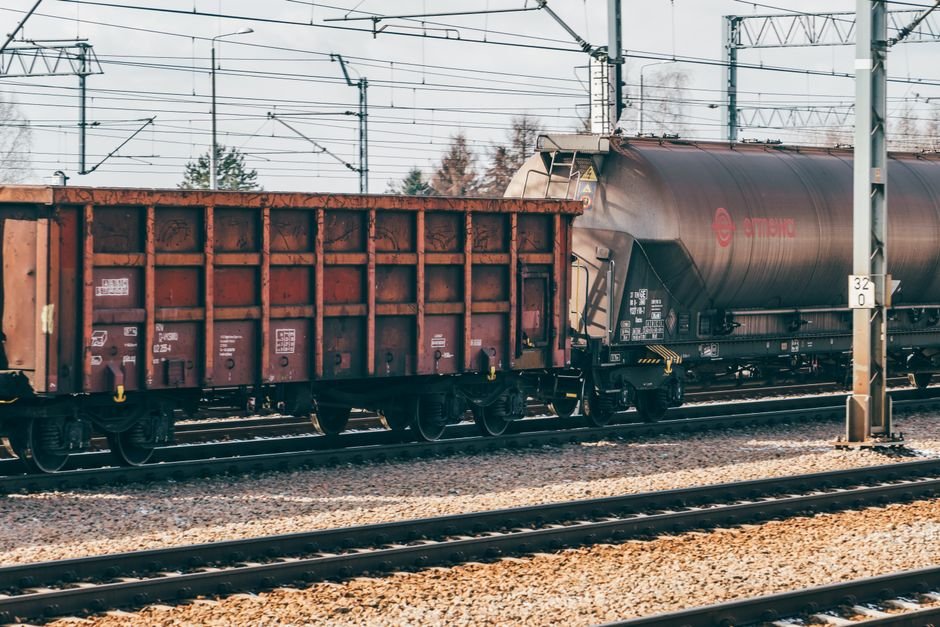
A failing axle bearing on a freight wagon announces itself in one way before it announces itself catastrophically: heat. A bearing that is losing lubricant or brinelling its races runs hot — tens of degrees above its neighbors — long before it seizes. A seized bearing at speed means a burned-off axle and, in the worst case, a derailment. Every freight railway therefore watches bearings, and the question is only how well.
This case looks at how a freight operator modernized its wayside hot-bearing detection — and what radiometric imaging added over the legacy contact sensors it replaced.
Project Background
In 2024, the infrastructure department of a freight railway in North China — a heavy-haul corridor moving coal and ore, with trains of a hundred wagons passing every few minutes at peak — audited its hot-box detection network. The line relied on a legacy generation of wayside detectors: single-element infrared sensors at trackside, installed decades earlier, reading one spot per axle box as trains passed. The audit was unflattering: detection rates degraded in winter when low ambient temperatures masked weak overheating, false alarms from sun-heated axle boxes triggered unnecessary stops in summer, and several verified hot bearings had passed undetected between detector sites. The operator funded a modernization pilot: three detection points rebuilt around radiometric thermal imaging arrays, with per-axle temperature profiles and trend analysis.
Pain Points of the Traditional Approach
- Single-point readings miss the picture. A spot sensor reads one small area of the axle box; a bearing heating asymmetrically, or a hot wheel or brake disc nearby, could be misread or missed entirely.
- Weather defeats thresholds. Fixed alarm thresholds tuned for temperate conditions fired late in deep winter cold and falsely on sun-loaded equipment in summer — the classic failure modes of non-imaging detection.
- No context for alarms. A legacy alarm said “hot axle, train X, position Y” with no image; dispatchers had to choose between an expensive stop and a risky pass on a number they could not see.
- Aging hardware, sparse coverage. Detector spacing reflected where the old units still worked, not where the risk analysis said they should be.
The Thermal Imaging Solution
Each rebuilt detection point images every passing axle box with a radiometric 1280×1024 LWIR core — resolution enough to profile the whole axle box, the bearing end cap, and the adjacent wheel, not just one spot. Triggered by wheel sensors, the system captures each axle at speed and builds a temperature profile per bearing, per wagon, per train.
The analytics do what spot sensors cannot: they compare each bearing against the train’s own population (a bearing 15°C hotter than its wagon-mates is an alarm even in deep winter), compensate for solar loading by reading the full box geometry, and keep per-bearing histories so a bearing trending warm over three passes is flagged before it crosses the absolute threshold. Every alarm ships with the thermal image, the measured temperatures, and the axle position — dispatchers see the evidence, not just a number.
What the Thermal Solution Changed
- Missed bearings dropped to zero in the pilot year. Every bearing later confirmed defective by depot inspection had been flagged in advance by relative-temperature analysis — including two that never crossed the old absolute threshold.
- False stops fell sharply. Weather-compensated, image-verified alarms cut false emergency stops by roughly two-thirds, recovering hours of corridor capacity each month.
- Alarms became actionable. Dispatchers and depot crews receive the thermal image and per-axle profile with each alarm; stops, when they happen, are confident and fast.
- Coverage now follows risk. With per-point hardware costs lower than the legacy rebuild estimate, the operator programmed two additional detection points to close the longest unprotected gaps.
Module Selection Notes
Wayside bearing detection needs a radiometric LWIR core with high resolution for full axle-box profiling, fast shutterless operation for trains at speed, and stable calibration across extreme outdoor temperatures. The SPECTRA L12A 1280×1024 LWIR core provides the pixel budget for whole-box profiling; where footprint is tighter, the SPECTRA L06A 640×512 core is the compact alternative. See the rail transit application page for wayside and onboard detection patterns.
Modernizing a hot-box detection network or building a new one? Talk to our engineers about core selection, trigger integration, and outdoor enclosure design.