In a road tunnel, a fire is a race measured in seconds. A burning vehicle in the open air is a traffic incident; the same fire inside a five-kilometre bore is a life-safety event, because heat and smoke have nowhere to go but along the ceiling toward the people trying to leave. Everything that matters — closing the portals, starting the right ventilation logic, stopping more traffic from driving in, getting people to the cross passages — happens or fails to happen in the first two minutes. And the first two minutes are exactly what conventional detection gives away.
This case looks at how a highway operator added fixed radiometric thermal cameras to a long tunnel’s safety system, and what detection at the speed of heat did to the race.
Project Background
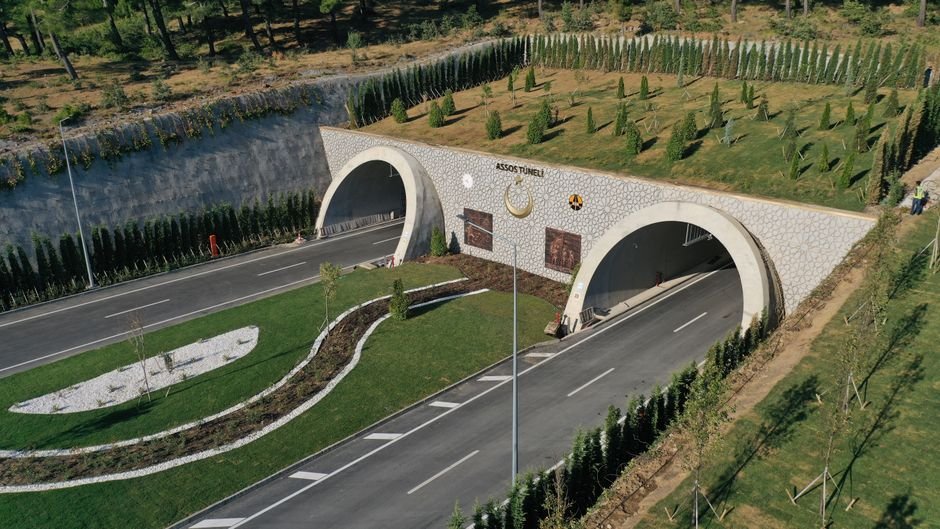
In 2024, the operator of an expressway in mountainous southwest China commissioned a safety review of its longest asset: a 5.2-kilometre twin-bore tunnel carrying a heavy mix of tourist coaches and descending freight trucks. The tunnel’s fire detection was the standard stack — a linear heat-detection cable along the ceiling, smoke and CO sensors, emergency phones, and visible CCTV monitored from the control room. The review’s uncomfortable finding was detection latency: the linear cable only responds once hot gases reach the roof in quantity, and smoke sensors are later still, meaning the system announced a fire minutes after ignition, well into the window that decides outcomes. The review also flagged a precursor the system ignored entirely: trucks arriving at the tunnel with brakes already glowing from the mountain descent. The operator approved a thermal upgrade: radiometric thermal cameras spaced through the bore, with fire analytics feeding the tunnel control system directly.
Pain Points of the Traditional Approach
- Ceiling-based detection waits for the fire to grow. Linear heat cable responds to hot gas that has already reached the roof — by definition, minutes of growth after ignition.
- Smoke detection is late by design. A smoke sensor needs smoke to arrive; in a ventilated bore, that journey is time the response cannot afford.
- Visible CCTV depends on a watcher. Sixty camera feeds reduce to whatever the duty operator happens to be looking at; smoke in the picture is noticed late, and flame at night can be mistaken for glare.
- Nothing watched the trucks before they burned. Overheated brakes and dragging components entered the tunnel already at fire temperature — a known precursor with no sensor assigned to it.
The Thermal Imaging Solution
The upgrade placed radiometric thermal cameras at intervals through both bores, each covering a long section of carriageway, with analytics running on the thermal stream. A vehicle fire in its smouldering phase is a fast-growing hot blob with a characteristic signature — the analytics raise the alarm in the first tens of seconds, typically before open flame is even visible, and automatically pull the corresponding view up in the control room with the ventilation and portal logic pre-staged for the operator’s confirmation.
Because the cameras are radiometric, the same system watches for precursors. Truck brake assemblies coming off the descent read their temperature plainly as they pass; a vehicle entering the bore with brakes above threshold is flagged to the control room and can be directed to the emergency bay before the smoulder becomes a fire. Headlights and exhaust heat, the classic false-alarm sources, are discriminated by signature — they are hot, but they are the wrong shape, the wrong place and the wrong behaviour.
What the Thermal Solution Changed
- Detection moved from minutes to tens of seconds. In live drills with a controlled fire source, the thermal analytics alarmed in under thirty seconds — against several minutes for the ceiling cable — pulling the entire response chain forward by the margin that matters.
- Two truck fires simply never happened. In the first year, overheating brake assemblies were flagged at the portal eleven times; on two occasions the vehicles were smoking as they pulled into the emergency bay.
- False-alarm fatigue ended. Headlight and exhaust false alarms that trained operators to hesitate were eliminated by thermal signature discrimination — alarms are few, and every one is treated as real.
- The business case rewrote the network plan. Detection latency, not camera count, became the operator’s metric; thermal coverage is now being extended to the network’s other long tunnels.
Module Selection Notes
Tunnel fire detection asks for radiometric LWIR cores with fast, stable measurement — analytics live on temperature dynamics, not on pretty pictures — in a housing that tolerates soot, vibration and jet-fan airflow, with servicing possible from the walkway. The SPECTRA L12T 1280×1024 radiometric module covers long carriageway sections per camera, reducing unit count through the bore. For auxiliary spaces — electrical niches, pump rooms and cross-passage equipment — the compact SPECTRA L06A 640×512 module fits the same monitoring platform. See the fire detection application page for early-warning architectures.
Planning detection for a tunnel, gallery or covered roadway? Talk to our engineers about spacing, analytics thresholds and integration.