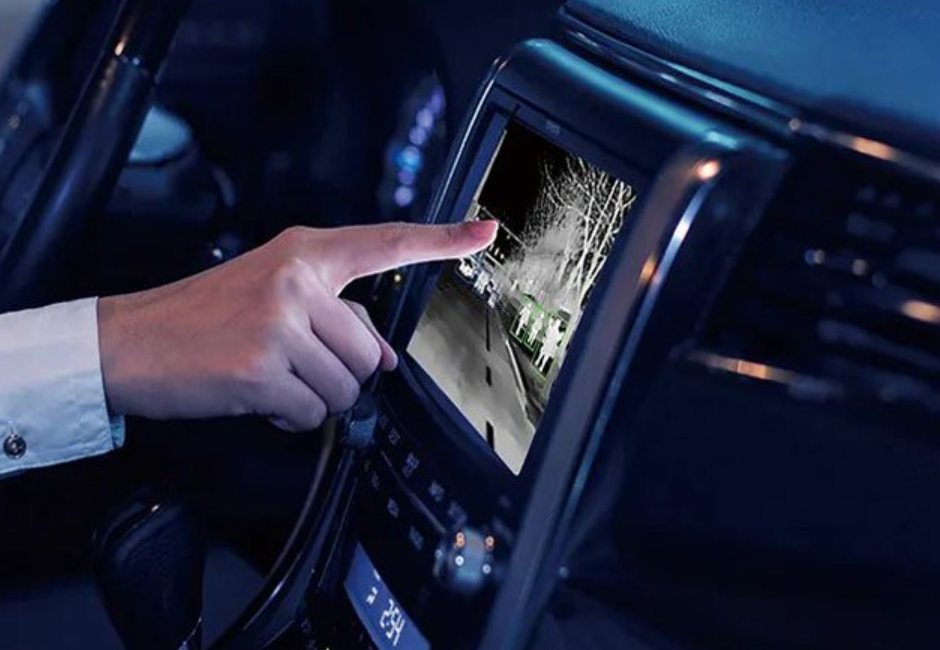
Headlights illuminate a few dozen meters; at highway speed that leaves seconds of reaction time. Vehicle-mounted thermal vision extends perception far beyond the beam: an uncooled LWIR core reads heat signatures of pedestrians, cyclists, animals and vehicles in total darkness, through oncoming glare, fog and smoke — and an onboard NPU turns that stream into detections the driver can act on.
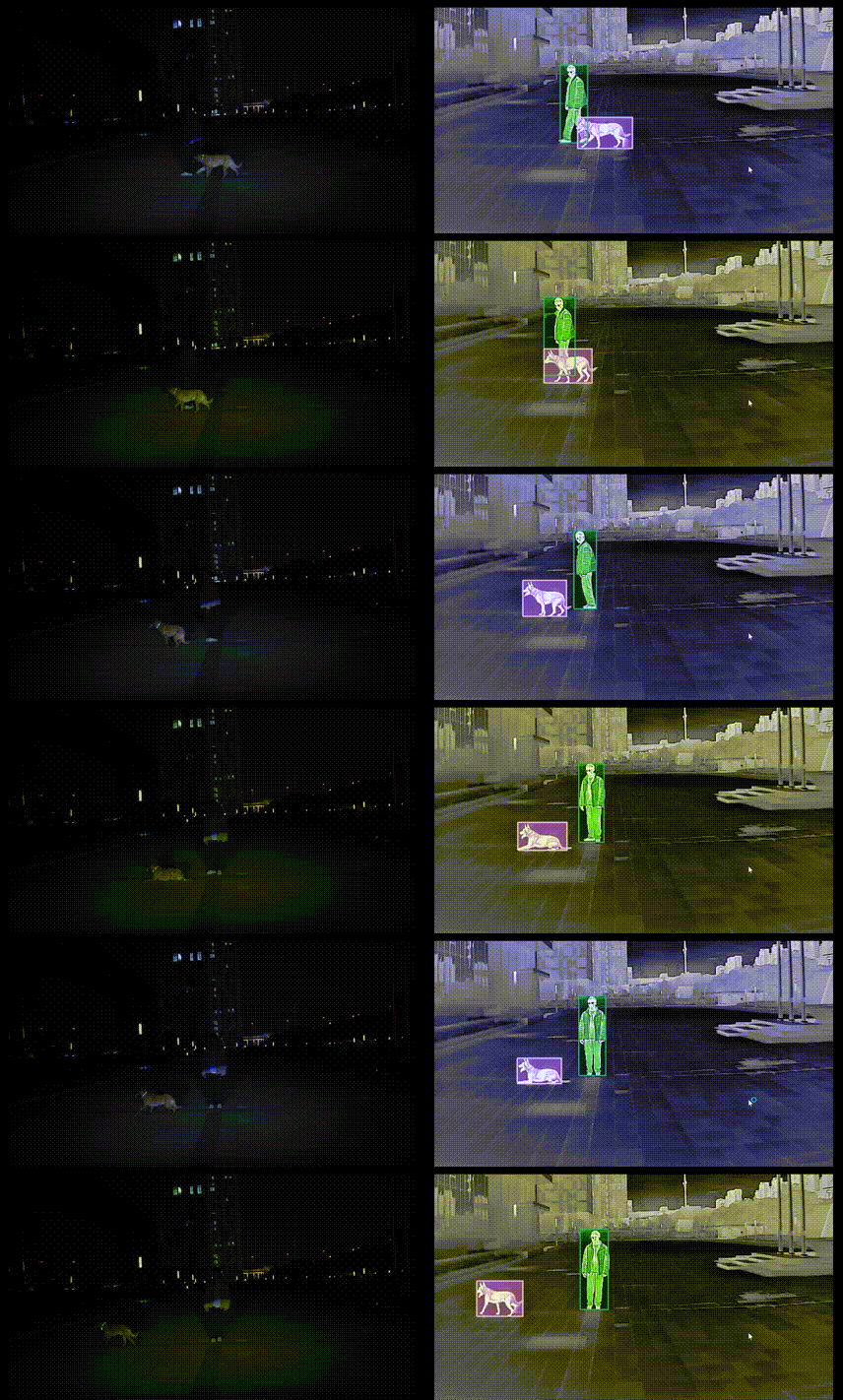
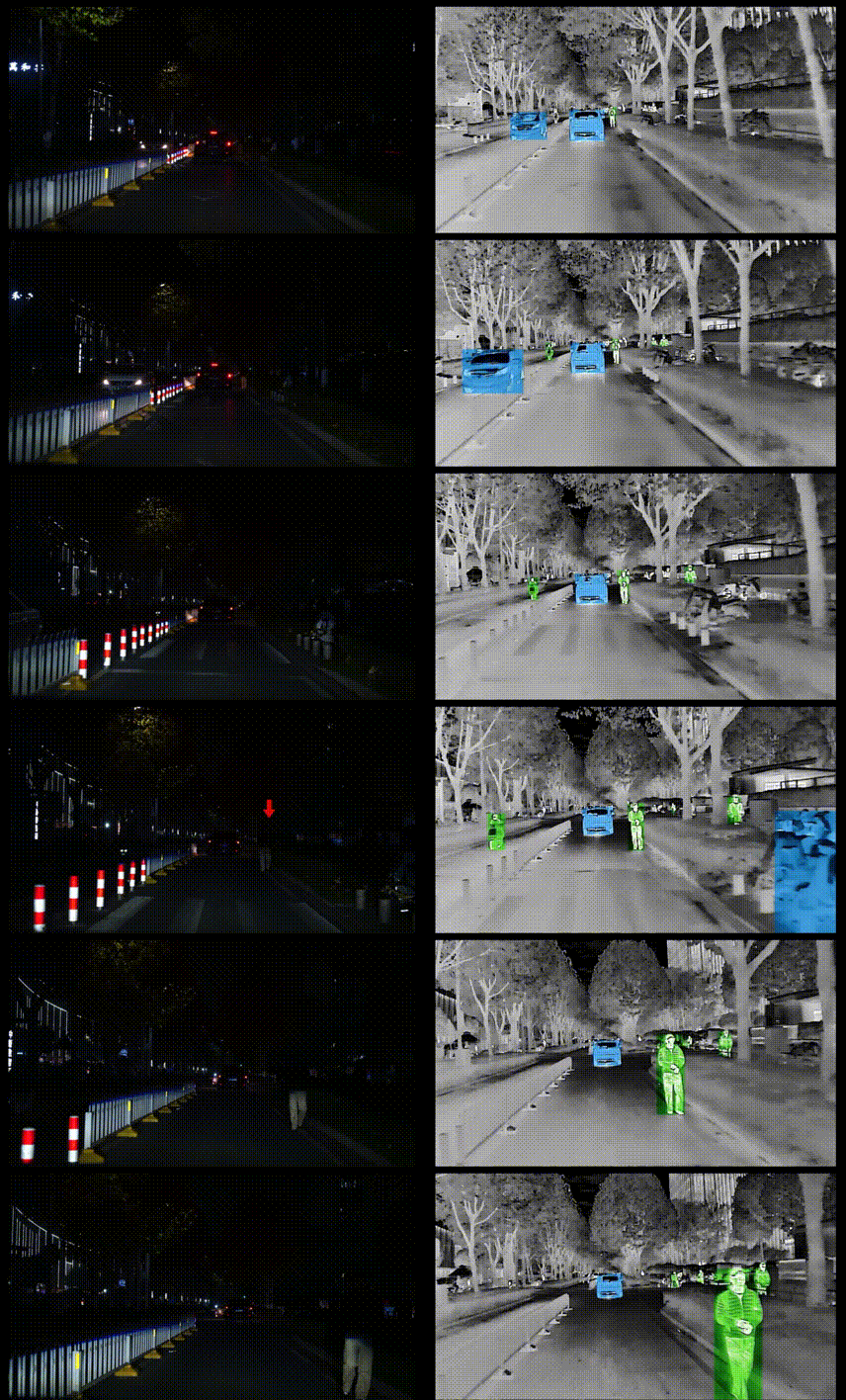
The two clips below are real night-driving footage from a 640×512 uncooled LWIR core, recorded on urban roads in Wuhan. In each pair the visible camera (left) shows what the driver sees; the thermal channel (right) shows what the AI sees — with on-device detection boxes marking pedestrians, animals and vehicles in real time.
Because detection runs on the module itself, there is no cloud round-trip and no extra compute box in the vehicle: the core outputs video plus structured detections over a single interface, ready to drive an in-cabin display, an ADAS fusion stack, or a recording system.
From night-driving assist and commercial fleet safety to mining trucks and rail-adjacent utility vehicles, vehicle-mounted AI thermal vision is the most direct upgrade from “brighter lights” to “seeing in the dark.”
Typical Deployments
- Night-driving assist: in-cabin split-screen displays extending driver vision beyond headlight range
- Commercial & fleet vehicles: pedestrian and animal detection for long-haul night routes
- Mining & industrial vehicles: dust, fog and total-darkness operation where visible cameras fail
- Special-purpose platforms: patrol, emergency and utility vehicles needing 24/7 perception
Module Selection Guide
| Scenario | Module | Key figures |
|---|---|---|
| AI detection on the module | NEXUS LV0619B | Onboard NPU: pedestrian, animal, vehicle detection |
| Night vision, full HD-class detail | SPECTRA L06C (640×512) | Uncooled LWIR, instant-on, low power |
| Cost-sensitive volume integration | SPECTRA L04C (384×288) | Compact uncooled LWIR core |
| Registered visible + thermal fusion | FUSION LV0625A | LWIR + visible on one chip |